 Gardener Mitcham: Recycling and Sustainability for Greener Gardens
At Gardener Mitcham we design an eco-friendly waste disposal area that prioritises resource recovery and biodiversity. Our approach to an eco-friendly waste disposal system in urban and suburban plots focuses on reducing landfill, increasing composting, and creating a sustainable rubbish gardening area where waste becomes a resource.
 Our sustainable rubbish gardening area model adapts to local boroughs' waste separation schemes and the practical realities of small-scale landscaping. We work with residents and community green spaces to align yard-level actions—like segregation of food and garden waste, and clean mixed recycling—with council rounds, so garden waste streams feed into formal composting facilities instead of residual bins.
Targets and measurable goals for a resilient green waste system
Gardener Mitcham has set a clear recycling percentage target: to achieve a 65% household and garden waste recycling rate across our managed sites by 2030, with an interim target of 50% by 2027. These targets are designed to support borough-wide efforts to divert organics and recyclables from landfill while improving soil health through local compost returns.
 We meet these targets with practical steps integrated into garden maintenance routines. Our fleet of low-carbon vans—mainly electric and hybrid models—reduces transport emissions for materials collection and delivery. Teams are trained to separate green waste, recyclable containers, and wood for chipping so materials are routed correctly to transfer stations and reuse partners.
Local transfer stations, partnerships, and the boroughs' approach
Local transfer stations play a central role in our logistics. We coordinate collections so that green waste and dry recyclables are taken to authorised transfer stations and composting facilities rather than residual depots. This aligns with many boroughs' three-stream approach: separate food and garden waste, mixed recycling (paper, glass, cans, plastics), and residual waste.
Our work relies on collaborations with community groups and charities to ensure reuse and redistribution of salvageable materials. Typical partnerships include:
- Community compost schemes that take shredded prunings and leaf mould
- Charitable reuse centres for pots, tools and salvageable timber
- Local social enterprises that remanufacture wooden palettes and create habitat logs
We place emphasis on sustainable garden waste area design so waste handling is integrated into the garden layout. Compost bays, woodchip pads and dedicated recycling corners reduce cross-contamination and make it easier for gardeners and residents to follow the boroughs' separation guidelines. Clear labelling and simple signage help everyone put the right items into the right stream.
 Operationally, Gardener Mitcham runs scheduled collections and drop-off days to maintain a tidy site without encouraging illegal dumping. Our low-carbon vans enable frequent, small-load transfers to nearby stations rather than infrequent large trips, which lowers emissions and keeps materials moving into circular channels quickly. We also record material flows to report progress against our recycling percentage target and adjust routes for efficiency.
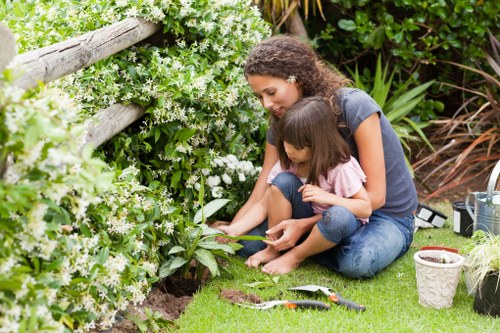 Practical recycling activity we commonly manage includes separation of: green garden waste for composting, clean glass and metal for local mixed recycling, and wood for chipping into mulch. We emphasise reuse: pots, bricks, and salvageable timber are donated or passed to charity partners rather than thrown away. These lightweight, incremental changes multiply across gardens and streets to create meaningful reductions in household residual waste.
To support borough-led waste separation, Gardener Mitcham also provides training sessions for volunteer gardeners and housing association staff, focusing on correct sorting of food versus garden waste and minimising contamination of recyclable loads. This is not a guide but a practical coordination: we adapt to local collection schedules and signage, helping communities meet council recycling standards more reliably.
Our partnerships with charities extend the life of garden materials and create social value: reclaimed timber projects benefit community planting schemes, surplus soil is directed to allotments, and compost collaboration channels improve urban soils. These collaborations also reduce disposal costs and boost circularity at the neighbourhood level.
In summary, Gardener Mitcham's vision for an eco-friendly waste disposal area and a sustainable rubbish gardening area combines clear targets, tactical routing to local transfer stations, charity partnerships and a low-carbon transport strategy. By aligning garden-level separation with borough systems, and turning waste into resources through composting, chipping and reuse, we create greener, cleaner outdoor spaces that benefit people and the planet.